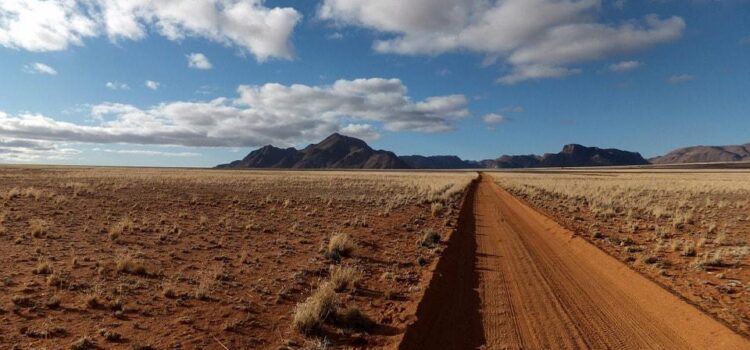
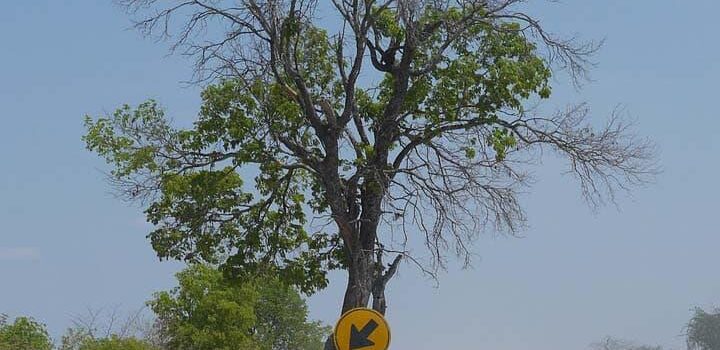
There’s nothing quite like exploring Namibia by road, its one of the best ways to experience the country’s vast landscapes, remote wilderness areas, and hidden gems. However, Namibia’s roads can also present challenges that many visitors may not be used to. Namibia’s beauty often lies off the beaten track, and with gravel, sand, and even salt roads forming part of most journeys, it’s important to be well-prepared behind the wheel.
We want your journey to be as safe and enjoyable as possible. Below, we’ve gathered our most important driving tips for Namibia, advice born from years of experience on these roads.
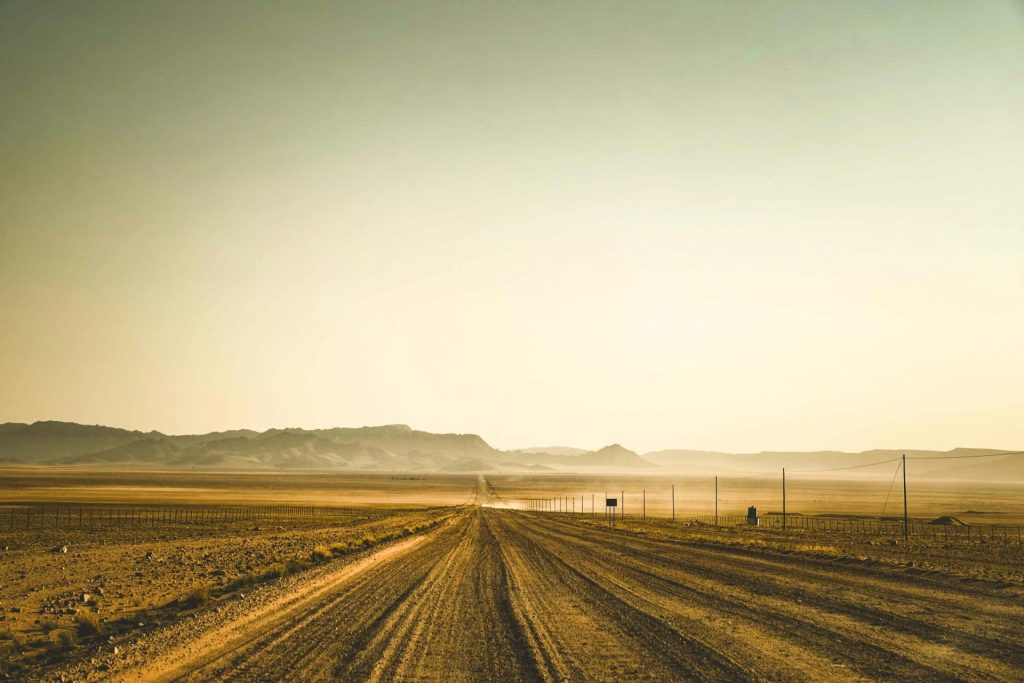
Road Speeds & Surfaces:
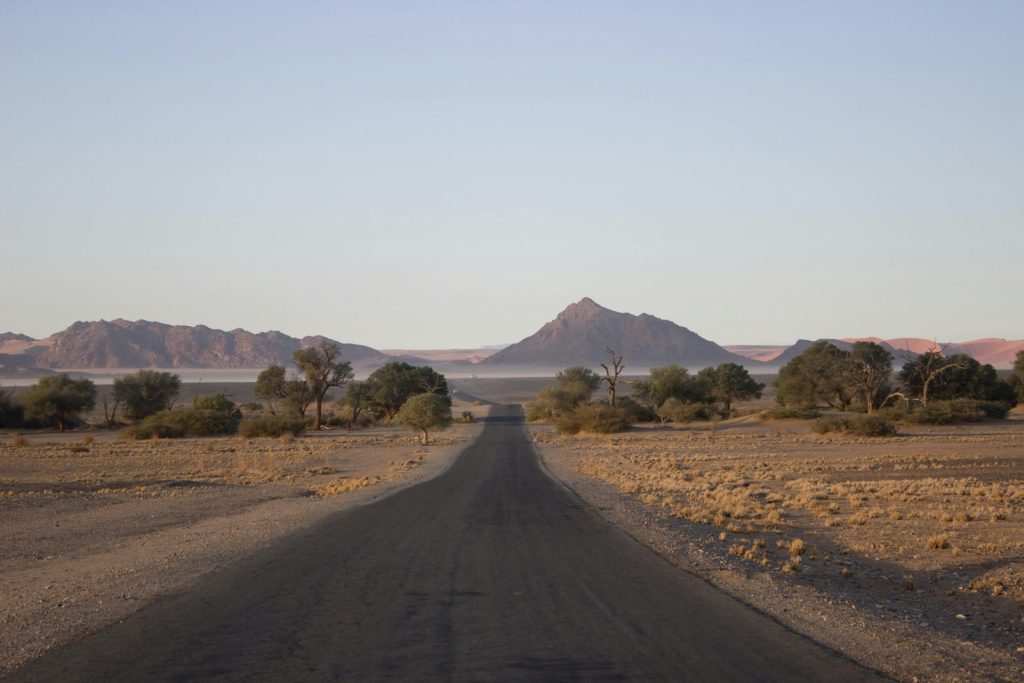
Tar Roads
– Max speed: 120 km/h (but adjust for conditions).
– Smooth and well-maintained, but distances are long — take breaks!
Gravel Roads
– Make up most of Namibia’s network.
– Safe speed: 60–80 km/h.
– Too fast = loss of control, especially on bends.
Tip: On gravel, slow and steady will get you there safely and with time to admire the scenery.
Corners, Braking & Control:
– Slow down before the bend, not during it.
– Hard braking on gravel = sliding out of control.
– Let the curve guide you naturally.
Salt Roads Along the Coast
Driving north of Swakopmund? Those shiny, flat “tar” roads are salt roads.
– When coastal mist drifts in, they become slippery.
– Reduce your speed and keep both hands on the wheel.
Lights On, Always: 💡
– In Namibia, headlights must be on day and night.
– Helps others see you through dust, heat haze, or long distances.
– Forgetting this can earn you a fine.
Why Night Driving is a No-Go:
– Animals (like kudu or warthogs) rest on warm tar at night.
– Collisions are common and often severe.
– Insurance won’t cover accidents after dark (unless it’s a true emergency).
– Most roads outside of towns do not have any lighting.
Plan to reach your lodge or camp before sunset. It’s safer and more relaxing.
Sand & River Crossings:
- Sand tracks: stop, engage 4×4, and drive slowly.
- Ephemeral rivers: wait until waters subside. If shallow, test the route on foot first.
- Tropical downpours: pull off safely, keep lights on, and wait.
Wildlife Watch:
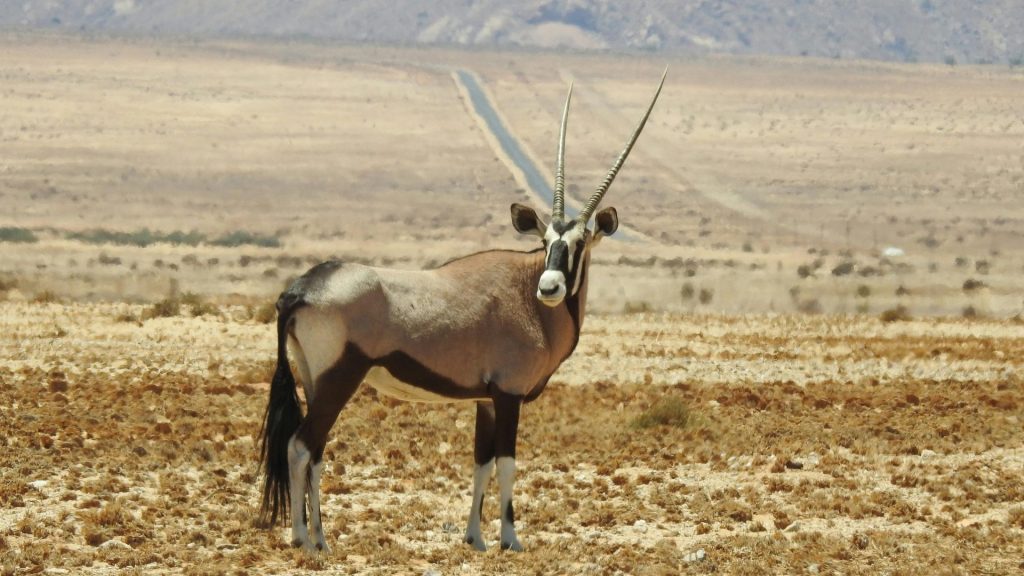
Namibia is alive with animals, some right on the roadside.
– Warthogs love to forage on verges and dart suddenly across.
– Large antelope like kudu can appear without warning.
– Always keep your eyes on the road edges, not just the horizon.
Reading the Signs:
– Gentle curve ahead: slow down by one-third.
– Sharp curve ahead: cut speed in half.
– Road signs here aren’t suggestions, they’re lifesavers.
– Unfamiliar signs? 3- and 4-way stops are common. They work by giving way to any vehicle that has arrived at the junction before you, so taking it in turns. You must stop at the junction or face a potential N$1,500 fine!
Tyres, Punctures & Pressure:
– Typical 4×4 (Toyota Hilux Double Cab) tyre pressure: 1.8 bar.
– Punctures sometimes happen, especially on gravel roads.
– Always place your safety triangle 45m behind the car before changing a tyre.
– Secure the remaining wheels with rocks for stability.
– All passengers should leave the car and stand at a safe distance from the road, under shade if possible.
Police Roadblocks:
Roadblocks are a normal part of driving in Namibia. You’ll find them along highways, near towns, or close to national parks. Always slow down, stop when instructed, and wait to be waved forward. Keep your driver’s license handy, remain calm, and treat officers with respect.
Fines and Motoring Offences:
If you’re fined, request an official ticket and note the officer’s details. Only stop at official, clearly marked roadblocks, and never for hitchhikers or individuals waving you down in remote areas.
Namibia enforces road safety with strict fines. Not wearing a seatbelt, for example, costs NAD 2,000 per person. Forgetting to switch on your headlights during the day, a legal requirement, can also lead to a fine. Speeding, skipping stops, or ignoring signs are all punishable, sometimes quite heavily.
If you do receive a fine, don’t panic. Always ask for the ticket and pay at the nearest police station, post office, or back in Windhoek (you have three weeks to make payment). Always insist on a receipt, and never make any roadside payments to an officer, this just feeds a cycle of corruption.
Other Essentials to Remember:
– Drive on the left-hand side.
– Seatbelts for everyone, fines are NAD 2,000 per person.
– Learn how to use your vehicle’s 4×4 function before you set off.
– Fuel stations are far apart, top up whenever you can.
– At 3- and 4-way stops: first come, first go.
– At police roadblocks: always stop. If fined, ask for the ticket and pay at the nearest police station (never pay cash). Stay calm and call us if anything seems amiss or they ask for a bribe.
Safari Operator’s Final Word
Driving in Namibia isn’t just a way to get from A to B, it’s part of the adventure. Take it slow, respect the conditions, and stay alert. The reward? Desert horizons that stretch beyond imagination, wildlife encounters you’ll never forget, and the freedom of exploring one of Africa’s most remarkable countries on your own terms.
Our advice: Let the journey be as memorable as the destination. Drive safe, and Namibia will open its magic to you.